By the Editorial Team · Updated July 2, 2026
The MRI cost without insurance in the United States can swing dramatically, from a few hundred dollars at a standalone imaging center to several thousand at a major hospital for the very same scan. If a doctor has ordered magnetic resonance imaging and you’re paying out of pocket, that uncertainty is stressful, but it also works in your favor: because prices are so inconsistent, an informed, self-pay patient often has real room to shop, ask questions, and negotiate. This guide breaks down realistic price ranges by body part, explains why the numbers vary so much, and walks through concrete steps to lower what you owe.
Typical MRI Cost Without Insurance by Body Part
There is no single national price for an MRI. What you pay depends on the body part, whether contrast dye is used, the type of facility, and even your ZIP code. Publicly available price-transparency data, along with consumer references such as FAIR Health and Healthcare Bluebook, suggest that most self-pay MRIs fall somewhere between roughly $400 and $3,500. Standalone imaging centers cluster toward the lower end, while hospital outpatient departments sit toward the higher end and sometimes beyond it.
The table below shows broad, illustrative self-pay ranges. Treat them as a starting point for questions, not as quotes. Always confirm the exact cash price with the specific facility before you book.
| MRI (body part) | Standalone imaging center (self-pay) | Hospital outpatient (self-pay) |
|---|---|---|
| Brain / head | $400 – $1,200 | $1,200 – $3,500+ |
| Spine / lumbar | $450 – $1,300 | $1,300 – $3,500+ |
| Knee | $400 – $1,100 | $1,000 – $3,000 |
| Shoulder | $400 – $1,100 | $1,000 – $3,000 |
| Abdomen / pelvis | $500 – $1,500 | $1,500 – $3,500+ |
Notice how the hospital column can be two to three times the standalone column for an identical exam. Adding contrast typically raises the price further. These ranges are attributed estimates drawn from published price-transparency and consumer-cost resources; actual prices in your area may fall outside them.
Why MRI Prices Vary So Wildly
Few purchases in American life are as opaque as medical imaging. Two centers on the same street can quote prices that differ by thousands of dollars for the same knee MRI. Several forces drive that spread.
First, there is no standardized “list price.” Each facility sets its own charges, and hospitals historically build in overhead for emergency departments, on-call staffing, and complex cases, which gets spread across all services, including routine imaging. Second, negotiated insurance rates, which quietly set the market for most patients, are invisible to the uninsured, so cash prices float free of any anchor. Third, geography matters enormously: imaging in a high-cost metro area can cost far more than in a rural or suburban market. Finally, the equipment itself varies. A high-field 3-Tesla magnet, an open MRI for claustrophobic patients, or a newer machine can carry different pricing than an older 1.5-Tesla unit.
The practical takeaway is that a high price does not necessarily mean higher quality, and a low price does not mean a worse scan. Accredited centers all follow safety and image-quality standards, so shopping on price is reasonable for most routine, non-emergency MRIs.
Hospital vs. Standalone Imaging Center
The single biggest lever on your MRI cost without insurance is usually where you go. Hospital-based outpatient imaging almost always costs more than a freestanding, or “standalone,” imaging center. Hospitals can attach a facility fee, a separate charge just for using the building and its resources, that an independent center typically does not have.
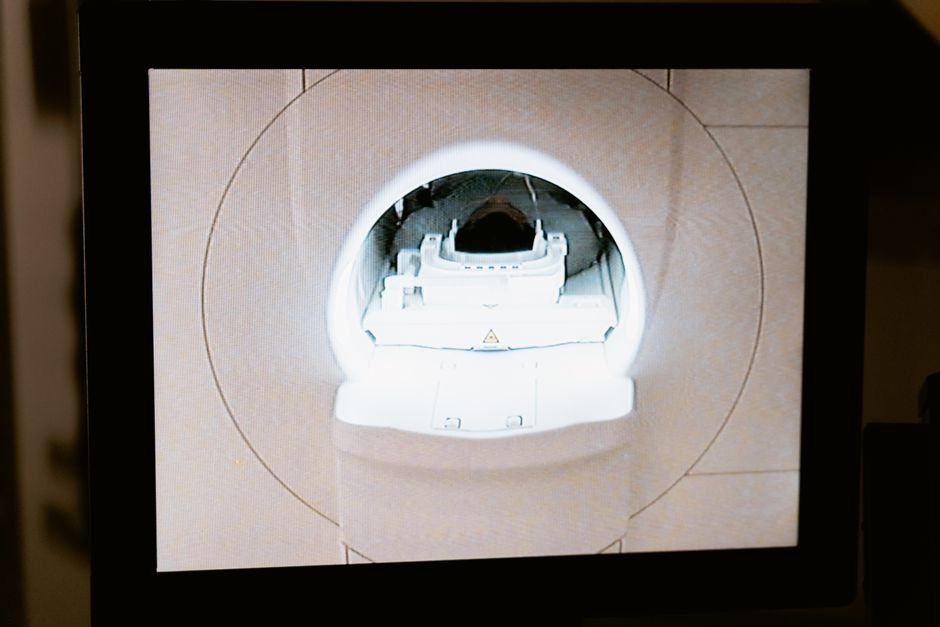
Standalone centers focus on outpatient imaging at volume, which lets them offer lower cash prices and, frequently, transparent self-pay rates you can get over the phone. For a routine, scheduled MRI ordered by your doctor, a standalone center is often the most cost-effective choice. Hospitals still make sense in specific situations, for example when your ordering physician needs the scan integrated with hospital care, when a specialized protocol is required, or when the imaging is part of urgent inpatient treatment. If your doctor referred you to a hospital out of habit, it is completely appropriate to ask whether an accredited standalone center would work for your case.
With vs. Without Contrast
Some MRIs use a contrast agent, usually a gadolinium-based dye given through an IV, to make certain tissues, blood vessels, or abnormalities show up more clearly. Whether contrast is needed is a medical decision made by your ordering doctor and the radiologist, not something to skip purely to save money, but it does affect price.
A scan “with and without contrast” involves more time, materials, and staff than a plain scan, so it typically costs more, sometimes several hundred dollars more. When you request a self-pay quote, always specify exactly what was ordered: the body part, and whether it is without contrast, with contrast, or with and without. A quote for the wrong protocol can be misleading, and surprise contrast charges are a common source of higher-than-expected bills. If you are unsure what was ordered, ask the referring office for the exact exam name or CPT code so the imaging center can price it precisely.
The Reading and Radiologist Fee
An MRI bill often has two parts. The “technical” component covers the scan itself, the machine, the technologist, and the facility. The “professional” component covers the radiologist who interprets the images and writes the report your doctor relies on. At some centers these are bundled into one self-pay price; at others they arrive as separate bills, sometimes from a separate radiology group.
This split is another common cause of surprise charges. When you get a cash quote, ask directly: “Does this price include the radiologist’s read, or will I receive a separate bill for the interpretation?” Getting that answer in writing, by email or a printed estimate, protects you from a second bill weeks later. Under federal hospital price-transparency rules, hospitals are required to publish standard charges, which can help you anticipate both components before you commit.
How to Lower MRI Cost Without Insurance
Being uninsured or on a high-deductible plan does not mean accepting the first number you hear. The following strategies routinely cut MRI costs, often substantially, and they are most effective for non-emergency, scheduled scans where you have time to plan.
Ask for the cash or prompt-pay price. This is the most important step. Many facilities have a discounted self-pay rate that is far lower than the “chargemaster” sticker price, and some offer an additional discount if you pay in full at, or before, the time of service. You usually have to ask for it by name: “What is your cash price, and is there a prompt-pay discount if I pay upfront?”
Choose a standalone imaging center. As covered above, freestanding accredited centers are frequently the lowest-cost option for routine MRIs. Confirm the center is accredited (for example by the American College of Radiology) so you are shopping on price without sacrificing quality.
Shop with price-transparency tools. Federal rules require hospitals to post their standard charges and require insurers to publish rates, and a growing number of consumer tools make this data searchable. Use references like Healthcare Bluebook or FAIR Health’s consumer cost lookup to see a “fair” price for your area, then call several centers and compare. Even a few phone calls can reveal price differences of a thousand dollars or more.
Negotiate. If you have a written quote from a cheaper accredited center, share it and ask a preferred facility to match it. If a bill has already arrived, call billing, explain you are uninsured, and ask for the uninsured or self-pay discount, and about hardship pricing. Many providers will reduce a bill rather than send it to collections.
Ask about financial assistance and payment plans. Nonprofit hospitals are generally required to have financial-assistance (charity-care) policies, and many will discount or forgive bills for patients under certain income levels. Even if you do not qualify for charity care, most facilities offer interest-free payment plans that spread the cost over months. Request the financial-assistance application before your scan when possible.
Practical Steps Before You Book Your MRI
Put the tactics together into a simple routine. Start by getting the exact exam details from your doctor’s office, including body part, contrast, and CPT code. Look up a fair-price benchmark for your area using a transparency tool. Then call at least three facilities, at minimum one standalone center and one hospital, and ask each the same questions: the all-in cash price, whether the radiologist read is included, and whether there is a prompt-pay discount. Get the best quote in writing.
If the price is still a stretch, ask about payment plans and financial assistance before the appointment rather than after the bill arrives. Keep every estimate and receipt, and review the final bill line by line against your quote. If a charge appears that you were not quoted, call and reference your written estimate. A little upfront legwork on your MRI cost without insurance can be the difference between a manageable expense and a bill that lands in collections.
Frequently Asked Questions
How much does an MRI cost without insurance?
Most self-pay MRIs in the US fall roughly between $400 and $3,500, depending on the body part, whether contrast is used, and the facility. Standalone imaging centers tend toward the lower end and hospitals toward the higher end. Always confirm the exact cash price with the specific facility, since local prices vary widely.
Is an MRI cheaper at a standalone imaging center than a hospital?
Usually, yes. Freestanding imaging centers often charge significantly less than hospital outpatient departments for the same scan, in part because they typically do not add a hospital facility fee. For routine, scheduled MRIs, an accredited standalone center is frequently the most affordable option.
Can I negotiate my MRI bill if I’m uninsured?
Often, yes. Ask for the cash or prompt-pay price before the scan, and if a bill has already arrived, request the uninsured self-pay discount and ask about hardship pricing or a payment plan. Many nonprofit hospitals also have financial-assistance policies that can reduce or forgive the bill based on income.
Why does adding contrast make an MRI cost more?
Contrast MRIs require an IV, the contrast agent itself, and more staff time, so they generally cost more than a plain scan. When requesting a quote, specify whether your order is without contrast, with contrast, or with and without, so the price matches exactly what was ordered.
Does the MRI price include the radiologist’s fee?
Not always. Some centers bundle the scan and the radiologist’s interpretation into one price, while others bill the “professional” read separately, sometimes from a different radiology group. Ask upfront whether the quote includes the read, and get the answer in writing to avoid a surprise second bill.
Trusted Resources for MRI and Medical Cost Information
To research prices and your rights, start with authoritative sources. The Centers for Medicare & Medicaid Services explains the federal hospital price transparency rules that require hospitals to post their standard charges. The Agency for Healthcare Research and Quality offers consumer guidance on navigating care and costs. And consumer cost-lookup tools such as FAIR Health Consumer can help you gauge a fair local price before you call around.
Disclaimer: This article is for general educational and informational purposes only and does not constitute medical, legal, or financial advice. Prices are illustrative ranges drawn from public price-transparency and consumer-cost resources and will vary by facility, region, and individual circumstances. Always confirm current pricing directly with providers and consult a qualified healthcare professional about your medical needs.